Types of Proxies: a complete overview and their use in Affiliate Marketing
In affiliate marketing, proxies are no longer a secondary technical detail. They form the backbone of the entire setup - influencing account lifespan, platform trust, and the ability to scale without constant bans or freezes. At the same time, the term “proxy” often means very different things to different marketers. Some rely on cheap datacenter IPs, others prefer residential traffic, while more experienced teams build their infrastructure around mobile proxies. This difference in approach explains why results can vary so dramatically.
In this article, we’ll take a structured look at the main types of proxies, how they differ, and which solutions work best for affiliate marketing in real-world conditions.
What is a Proxy and why it matters!?
A proxy server acts as an intermediary between a user and a website or advertising platform. Instead of your real IP address, the platform sees the proxy IP through which all traffic is routed. In affiliate marketing, this matters not just for anonymity, but for control. Advertising platforms evaluate the entire network environment - IP reputation, connection type, location consistency, and stability. Proxies directly affect how “natural” your activity looks to automated anti-fraud systems.
Main types of Proxies: a practical comparison
There are several core proxy types on the market. Each comes with its own trade-offs, which become especially visible when campaigns start scaling.
|
Proxy type |
IP source |
Trust level |
Stability |
Typical use |
|
Datacenter |
Server infrastructure |
Low |
High |
Testing, technical tasks |
|
Residential |
Real home users |
Medium |
Medium |
Small-scale campaigns |
|
Mobile (4G/5G) |
Mobile carriers |
High |
High |
Affiliate marketing, scaling |
This comparison already highlights a key pattern - the more “human” the IP source looks to platforms, the higher the trust and long-term stability.
Datacenter Proxies: fast but fragile
Datacenter proxies are hosted in server facilities and are not associated with real end users. They offer excellent speed and low cost, which makes them attractive for beginners. However, advertising platforms identify datacenter IP ranges quickly. Their reputation is usually low, and accounts running exclusively on such proxies rarely survive long. In affiliate marketing, datacenter proxies are best kept for auxiliary or technical workflows rather than live ad accounts.
Residential Proxies: more natural, less predictable
Residential proxies use IP addresses of real home users, which makes them appear more authentic than datacenter traffic. The downside is architecture. Most residential solutions rely on large shared pools, meaning IP history is often unknown and uncontrollable. At small volumes, this may work reasonably well. At scale, inconsistent reputation and unstable connections become limiting factors.
Mobile Proxies: why platforms trust them most
Mobile proxies operate on IP addresses provided by 4G and 5G carriers. From the perspective of advertising platforms, this traffic closely resembles everyday smartphone usage. What makes mobile proxies especially effective is not just the network type, but how platforms treat mobile IPs by default.
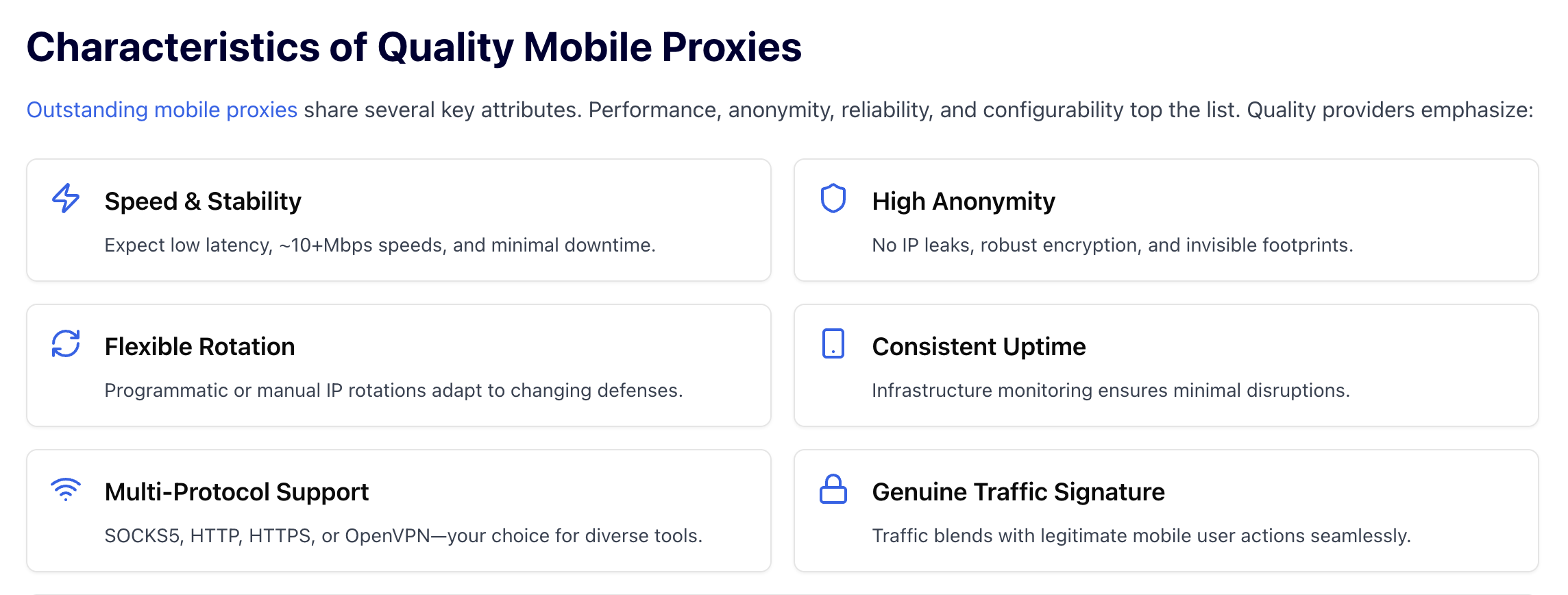
How platforms perceive different Proxy types
|
Factor |
Datacenter |
Residential |
Mobile |
|
Seen as real user |
No |
Partially |
Yes |
|
IP reputation |
Low |
Medium |
High |
|
Risk of mass bans |
High |
Medium |
Low |
|
Suitable for scaling |
No |
Limited |
Yes |
As a result, mobile proxies are widely used for paid traffic, multi-accounting, and long-term affiliate marketing setups.
Not all mobile proxies are the same
Despite their advantages, mobile proxies differ significantly depending on how they are implemented.
Many providers offer:
- mobile IPs from shared pools
- limited or forced rotation
- partial user isolation
With these models, IP reputation can degrade over time, and stability often drops as load increases. This is where infrastructure design becomes critical.
An infrastructure-based approach to mobile Proxies
Some services treat mobile proxies not as a consumable resource, but as dedicated infrastructure. One example of this approach is Coronium.
Instead of accessing a shared IP pool, users rent a dedicated physical 4G or 5G device with a SIM card from a mobile carrier. Each device is assigned to a single client, ensuring full traffic isolation.
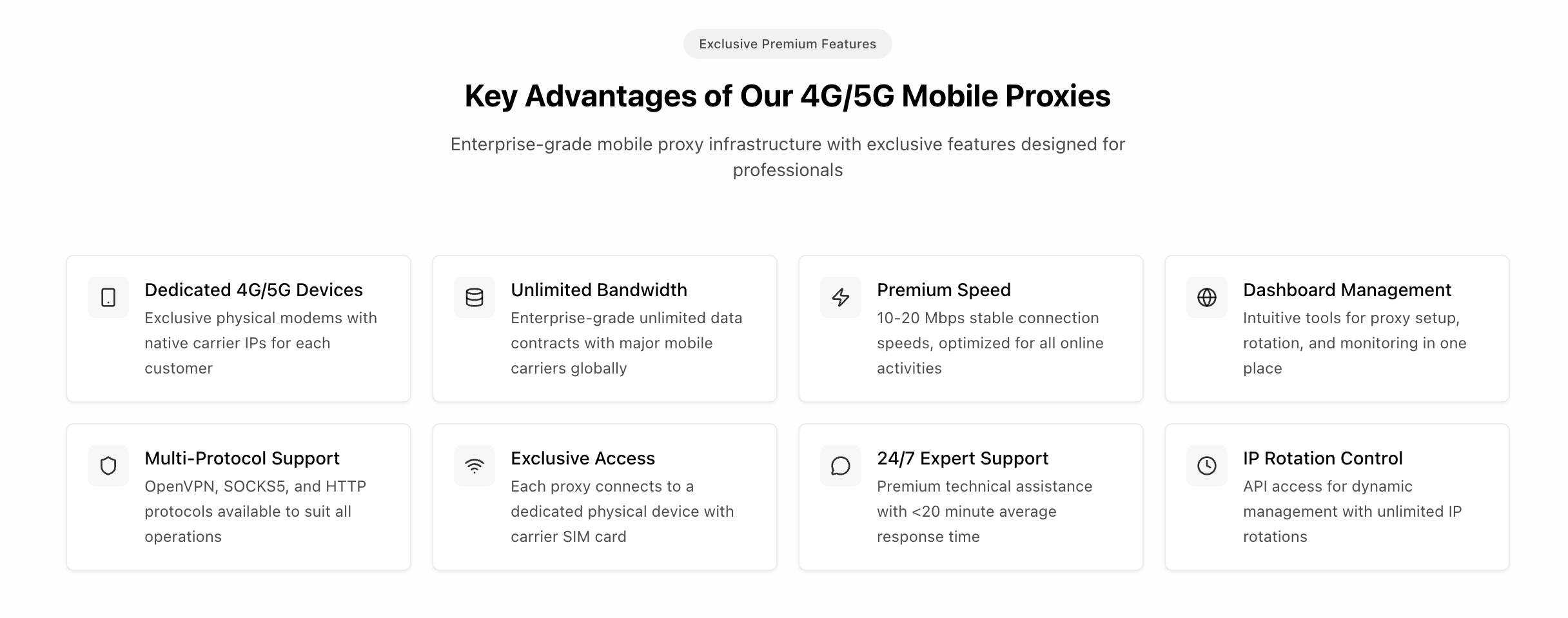
Shared pools vs dedicated mobile devices
|
Aspect |
Shared mobile pools |
Dedicated devices |
|
IP ownership |
Shared |
One device per client |
|
IP pollution |
Possible |
Excluded |
|
Traffic isolation |
Partial |
Full |
|
Stability at scale |
Unpredictable |
Consistent |
From an anti-fraud perspective, such connections look identical to real mobile user activity, which significantly reduces platform scrutiny during scaling.
Practical use cases in Affiliate Marketing
In real-world affiliate marketing workflows, mobile proxies are commonly used for multi-accounting, working with anti-detect browsers, ad and geo verification, SEO and SERP monitoring, web scraping without captchas, and automation processes where stability is critical. The key advantage is consistency - real mobile traffic generates fewer blocks and fewer unexpected verification requests.
What to look for when choosing Proxies
Regardless of proxy type, several factors directly affect performance:
- level of IP isolation
- rotation control and flexibility
- connection stability
- GEO accuracy
- IP reputation management
- transparency of infrastructure
Cutting costs at this level almost always leads to higher losses later - through banned accounts and wasted operational time.
Which Proxy type works best for Affiliate Marketing
Based on practical experience across different scales:
- datacenter proxies are suitable for testing and background tasks
- residential proxies can work at limited volumes
- mobile proxies provide the most stable foundation for long-term growth
This is why most experienced affiliate marketers eventually migrate toward mobile-based infrastructure.
Conclusion
Proxies are not just a technical add-on, but a strategic component of affiliate marketing. The chosen proxy type directly influences account longevity, campaign stability, and scalability.
Understanding the differences between datacenter, residential, and mobile proxies helps avoid common mistakes and build a more resilient setup. And when mobile proxies are backed by a well-designed infrastructure, they offer a clear advantage in an environment where anti-fraud systems continue to evolve.
Want to start with nutra? Have questions about the case-study?
All the nutra is discussed now 24/7 in the telegram chat Nutra Affiliate Community
Quick help for beginners
Sweet cases for motivation
Exclusive bonuses from partners $$$$
Intelligent moderators and all support for affiliate network in one place